Jump to HeaderJump to Main ContentJump to Footer
Michigan State University
Beal Botanical Garden & Campus Arboretum

Beal Botanical Garden & Campus Arboretum

  • Visit & Events
    • Overview
    • Events
    • Free Digital Guide
    • Garden Accessibility
    • Garden Etiquette
    • Public Tours
    • Exploration Map
    • Garden Collections Map
  • |
  • Science
    • Overview
    • Beal Seed Experiment
    • Invasive Plants
    • Red Cedar Riverbank Restoration
    • Research and Teaching Permits
  • |
  • Education
    • Overview
    • Classes
    • Beal Scholars
    • Resources
    • Public Tours
    • Tour Request Form
  • |
  • Nuture Your Roots
    • Overview
    • Rooting Stations
    • Nurturing Campus
    • Extending Roots
    • Meditation Map
  • |
  • Plant Collections
    • Overview
    • Core Collections
    • Thematic Collections
    • Augmented Reality Collection
    • Exploration Map
    • Garden Collections Map
  • |
  • Campus Arboretum
    • Overview
    • Exploration Map
    • Historic Woodlands of MSU
    • Campus Tree Tour
    • Research and Teaching Permits
  • |
  • Support
    • Make a Gift
    • Volunteer
    • Commemorative Trees and Benches
    • Donor Spotlights
  • |
  • About
    • Overview
    • Mission & Strategic Plan
    • Our Team
    • Our Beal Scholars
    • History
    • Then and Now Historical Gallery
    • Resources
    • Media Coverage
    • Media Archive
    • Arts MSU
Beal Botanical Garden & Campus Arboretum
  • Visit & Events
  • Science
  • Education
  • Nuture Your Roots
  • Plant Collections
  • Campus Arboretum
  • Support
  • About

< Visit & Events

  • Overview
  • Events
  • Free Digital Guide
  • Garden Accessibility
  • Garden Etiquette
  • Public Tours
  • Exploration Map
  • Garden Collections Map

< Science

  • Overview
  • Beal Seed Experiment
  • Invasive Plants
  • Red Cedar Riverbank Restoration
  • Research and Teaching Permits

< Education

  • Overview
  • Classes
  • Beal Scholars
  • Resources
  • Public Tours
  • Tour Request Form

< Nuture Your Roots

  • Overview
  • Rooting Stations
  • Nurturing Campus
  • Extending Roots
  • Meditation Map

< Plant Collections

  • Overview
  • Core Collections
  • Thematic Collections
  • Augmented Reality Collection
  • Exploration Map
  • Garden Collections Map

< Campus Arboretum

  • Overview
  • Exploration Map
  • Historic Woodlands of MSU
  • Campus Tree Tour
  • Research and Teaching Permits

< Support

  • Make a Gift
  • Volunteer
  • Commemorative Trees and Benches
  • Donor Spotlights

< About

  • Overview
  • Mission & Strategic Plan
  • Our Team
  • Our Beal Scholars
  • History
  • Then and Now Historical Gallery
  • Resources
  • Media Coverage
  • Media Archive
  • Arts MSU
Home > 150th Anniversary of Beal Garden > Then and Now Photo Gallery >

Sleepy Hollow (1910s to 1920s)
Sleepy Hollow (1910s to 1920s)

Contact us

WJBeal@msu.edu

Garden Newsletter

Join Our Newsletter

Address

Beal Botanical Garden and Campus Arboretum Michigan State University 408 W. Circle Dr. Room 207 East Lansing, MI 48824

Follow Us

  • Visit our Facebook page
  • Visit our Instagram page
  • Visit our LinkedIn page
  • Visit our YouTube page

If you're having accessibility issues, please let us know.

  • Contact Information|
  • Site Map|
  • Privacy Statement|
  • Site Accessibility|
  • Call MSU: (517) 355-1855|
  • Visit: msu.edu|
  • Notice of Nondiscrimination|

SPARTANS WILL|© Michigan State University|

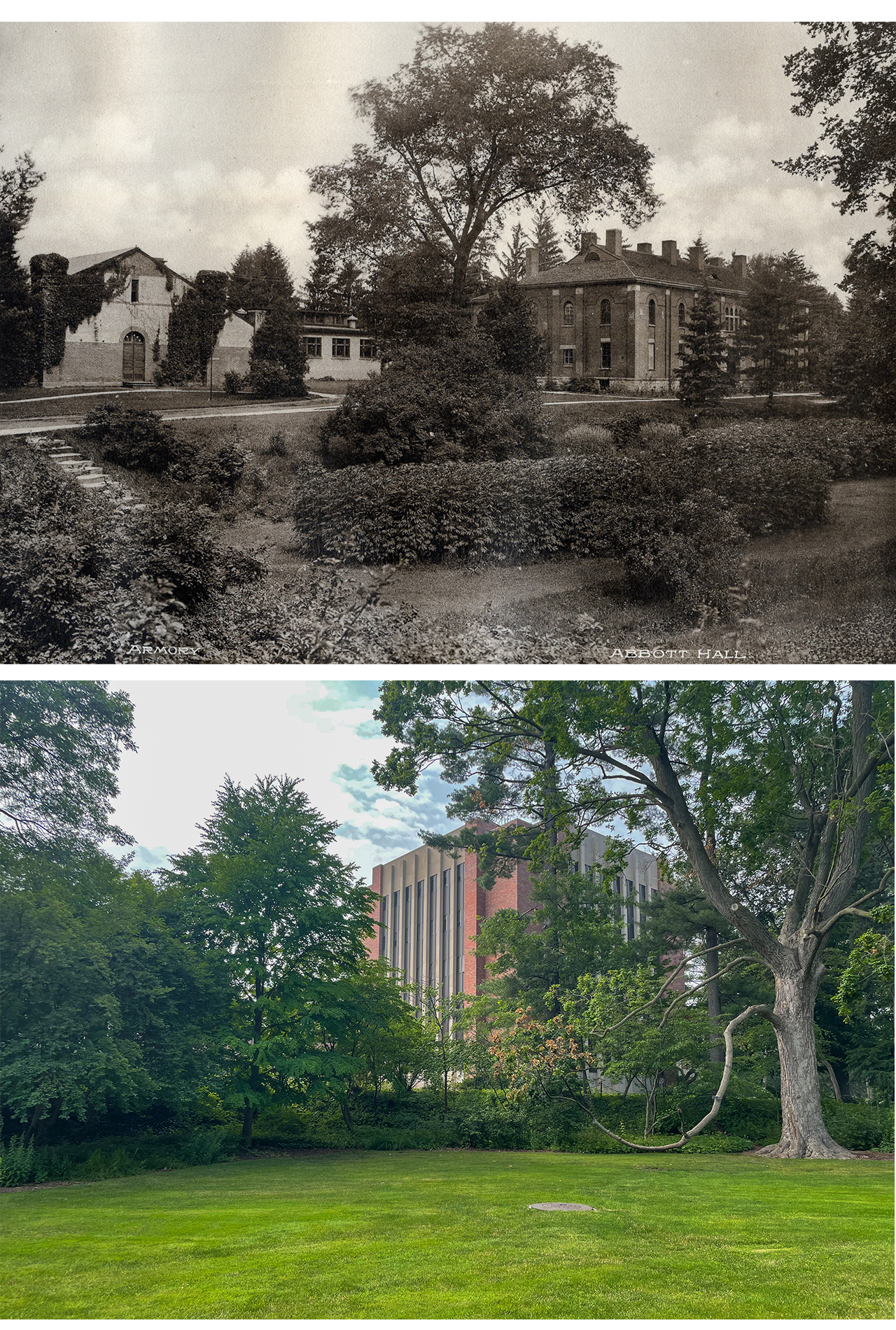
While it is separated by West Circle Drive, Sleepy Hollow remains part of the Beal Botanical Garden. This area is critical to the history and identy of the garden, it being the site of the original garden. First planted in 1873, the garden comprised a modest collection of weeds, grasses, and clovers—140 species in total—and generally blended in with the natural landscape, devoid of commercial or obvious human maneuvering. Being comprised mostly of grasses, Professor Beal labeled this area “the Grass Garden.”

As time went by, the Grass Garden disappeared and new plants eventually were added. In 1961, moist and well-drained, humus-rich soil allowed the Garden to grow hybrids of acidophilous plants like rhododendrons and azaleas. These are now planted at sleepy Hollow thanks to the high canopy of mature oak trees providing the area with shading.

The photo taken is dated to be around the 1910s and early 1920s, showing what Sleepy Hollow used to look like as well as the surrounding buildings. One of the young trees taken in the photo is an eastern white pine, and that tree is still alive today.